Prepare Your Roof Coating For Monsoon Season
Tucson doesn’t ease into monsoon season. One afternoon the sky is clear and blue, and an hour later you can’t see across the street. When those storms hit, your roof is the first line of defense — and if it isn’t ready, you’ll know about it fast.
If you’ve lived here long enough, you already know the drill. But knowing something needs to get done and actually getting it done before the first wall of rain rolls in from the southeast are two different things. This is what you should be looking at — and doing — before monsoon season arrives.
Start With an Honest Assessment
Before anything else, get eyes on your roof. Not a glance from the driveway — an actual inspection. What you’re looking for depends on what kind of roof you have.
On flat and low-slope roofs with elastomeric coating, the common failure points are cracks along seams, peeling or bubbling coating, and worn-out areas around scuppers and penetrations. These aren’t cosmetic issues. A crack that looks minor in May can open up and funnel water into your home by July.
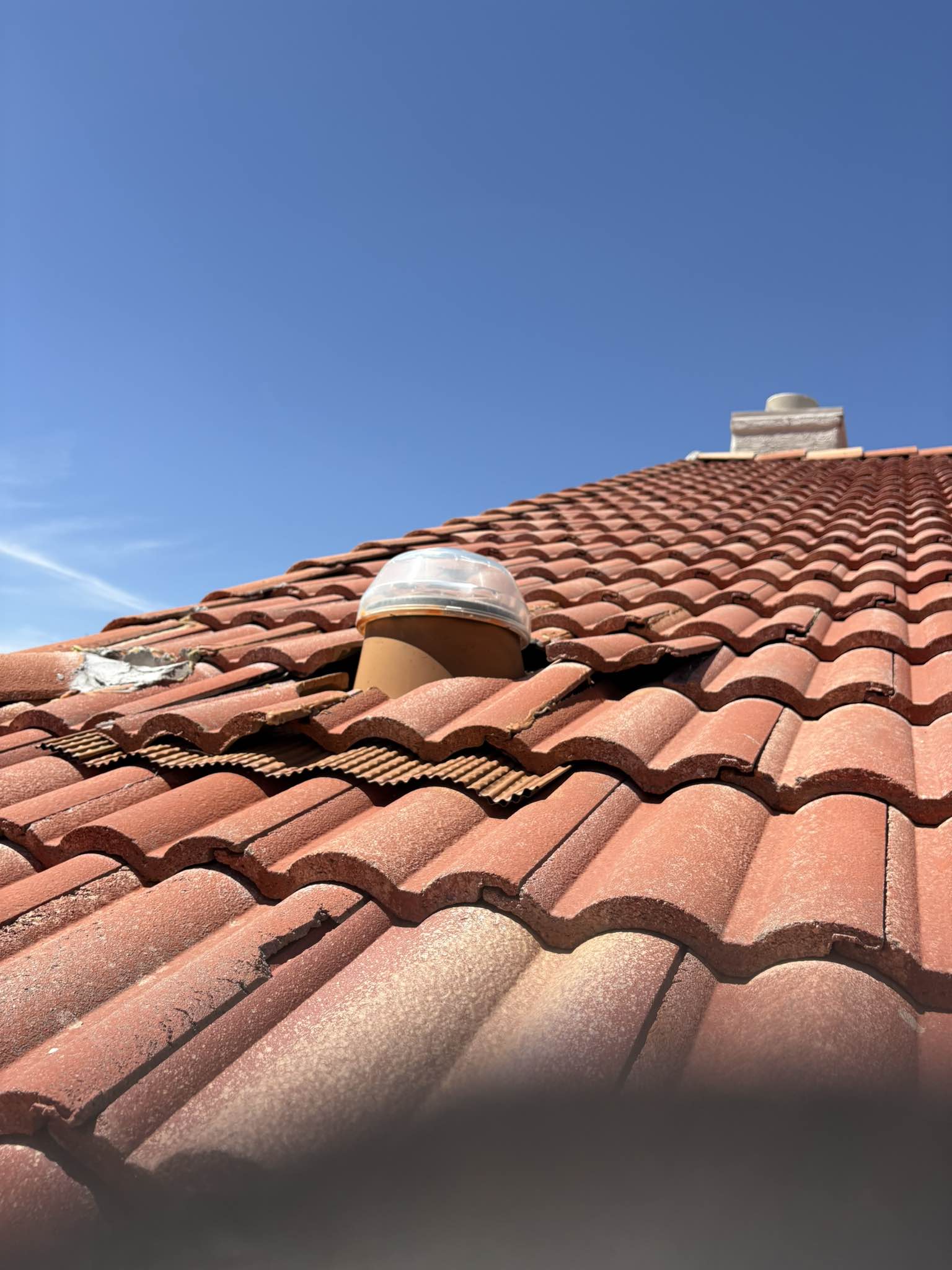
On tile roofs, you’re looking at the condition of the underlayment — the waterproof layer beneath the tiles that most homeowners never think about until it fails. Cracked mortar at the ridgeline, shifted tiles, and deteriorating flashing around valleys and vents are all worth checking before the rain starts. The tiles themselves are durable. What’s underneath them isn’t always.
On shingle roofs, Tucson’s pre-monsoon heat already does its damage. Look for lifted or curling shingles, granule loss, and any areas where the shingles have cracked or separated. Wind events during monsoon can pull compromised shingles completely off. If they’re already weakened, a storm will finish the job.
Address the Problem Areas First
Every roof has weak points. On coated roofs, scuppers are responsible for the vast majority of leaks. They’re the drainage points where water exits the roof, and the expansion and contraction from Tucson’s heat cycles causes the coating around them to crack and separate over time. If your scuppers aren’t sealed properly going into monsoon season, you’re gambling.
The same goes for any penetration — vents, pipes, HVAC equipment, anything that breaks the plane of the roof. Heat cycles cause constant micro-movement at these junctions, and over time, that movement cracks the coating. These areas need to be inspected, reinforced, and sealed before the storms arrive, not after your ceiling starts showing water stains.
On tile and shingle roofs, pay attention to the valleys — the V-shaped channels where two roof planes meet. These are high-volume drainage points during heavy rain. If flashing has corroded or mortar has cracked, that’s where monsoon water will find its way in.
Clean the Surface Before You Coat
If your flat roof needs recoating, the prep work matters as much as the coating itself. A new coat applied over a dirty, degraded surface won’t bond correctly and won’t last. The roof needs to be pressure washed — and in some cases treated with a cleaning agent to break down stubborn buildup — before any material goes on.
In Tucson’s dry heat, roofs dry quickly after washing. That’s one advantage of working in this climate. But the surface still needs to be completely dry before coating begins. Any trapped moisture beneath a fresh coat creates adhesion problems that show up as bubbling and blistering down the road.
This is also why the timing of coating work matters. Pre-monsoon prep should happen while conditions are still dry and predictable — not once the afternoon thunderstorms have already started cycling through.
Don’t Cut Corners on Materials or Coverage
This is where a lot of Tucson homeowners get burned — not by skipping the work entirely, but by hiring someone who does it halfway. The right elastomeric coating applied at the wrong coverage rate won’t protect your roof the way it should. Manufacturer specs exist for a reason, and a contractor who won’t tell you what material they’re using or how much they’re putting on is a contractor worth avoiding.
The same principle applies to shingle and tile work. A patch that isn’t properly integrated with the surrounding system, or a flashing repair done with the wrong materials, will fail. Monsoon season has a way of exposing shortcuts.
Know When Prep Isn’t Enough
Sometimes a roof is past the point where seasonal prep will carry it through another monsoon season. If your flat roof coating is severely degraded across a large area — not just cracked at the seams but peeling, blistering, or exposing the substrate — a touch-up isn’t the right answer. The same goes for tile underlayment that’s reached end of life. A few gallons of coating over a failing system buys you time, not protection.
Getting an honest evaluation before monsoon season gives you the option to plan. Finding out your roof needs more than a tune-up after the first major storm gives you an emergency.
Ready to Get Your Roof Assessed?
DSR Roofing has been working on Tucson roofs long enough to know what holds up and what doesn’t. We inspect tile, shingle, flat, and coated roofs throughout the Tucson area and give you a straight answer about what your roof actually needs — nothing more, nothing less. Get a quote before monsoon season and go into the summer knowing your roof is ready.