If you have a flat or low-slope roof in Tucson, this question matters more than most homeowners realize. Not because the math is complicated; it isn’t. But because the answer is where a lot of roofing contractors either cut corners or hope you never ask. Understanding how much roof coating your roof actually needs puts you in a much better position to hold any contractor accountable before the job starts.
Start With the Manufacturer’s Specification
Every elastomeric roof coating comes with a Technical Data Sheet that specifies exactly how much material should be applied per square foot. That number isn’t a suggestion; it’s the threshold your roof needs to hit in order to perform the way the product was designed to perform and for the warranty to mean anything.
The coating DSR uses — Tucson Rubberized 7000 — is specified at 1 to 1.5 gallons per 100 square feet, per coat. That rate is determined by the chemistry of the product; specifically how thick the dried film needs to be to stay flexible through Tucson’s heat cycles and monsoon moisture. Any contractor using a different product should be able to hand you their data sheet and point to the same number. If they can’t, that’s worth paying attention to.
How to Calculate Your Roof’s Square Footage
Before you can calculate material, you need an accurate measurement. Your home’s living square footage is not the right number; it’s almost always lower than the actual roof surface area, and using it will leave you short on material.
In Arizona, the living space does not include the garage, porches, overhangs, and parapet roll ups. Each of these elements adds to the overall roof coating that is needed. The best way to determine the elastomeric coverage area is to purchase a measuring roller and roll out the exact amount of coverage. Remember, the square footage of a rectangle or square is found by multiplying the base and the widths. A = B x W. To find the square footage of a triangle area multiply the base and the height and divide by two. A = (B x H)/2. These simple equations will help you. We recommend walking your roof and adding up the different sections until the entire square footage of the roof is determined.
The most reliable free tool for this is Google Maps’ measurement feature. Draw a perimeter around your roof, close the shape, and it will give you an approximate square footage. If your roof has any pitch to it, add 5 to 10 percent to account for the slope. If you have a Santa Fe style home with parapet walls, factor in the coating that rolls up onto those walls; it’s part of the surface area and needs to be included in your calculation.
Running the Numbers
Once you have your square footage and the manufacturer’s coverage rate, the math is straightforward.
Take your total square footage and divide by 100. That gives you the number of gallons needed for one coat. For a 2,000 square foot roof, that’s 20 gallons per coat. Two coats — which is standard — brings you to 40 gallons total. Most elastomeric coatings are sold in 5-gallon buckets, so 40 gallons equals 8 buckets.
That’s the minimum for a roof in reasonable condition. If your existing coating is aged, peeling, or significantly thinned out, expect the first coat to absorb more material than usual. A rough rule of thumb for roofs that haven’t been coated in five or more years is to budget approximately 10 percent more material overall; the first coat will pull more and the second coat will level off closer to spec.
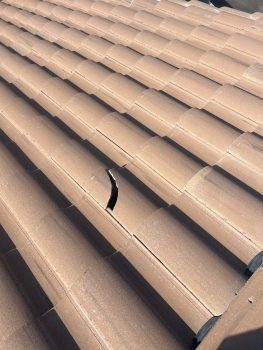
A second factor that typically uses more coating is the amount of patching that is needed on a roof. If the roof is in pretty bad shape with many cracks, dry peeling, or the felt paper is showing, expect the roof coating to be soaked up in these areas. As a general rule add 5-10% on the square footage of the coverage area if you expect to do a significant amount of patching.
A contractor who does this work correctly should be able to give you the exact bucket count in writing before the job starts. At DSR, that number goes directly into every estimate so there’s no ambiguity about what’s being applied to your roof.
How Many Coats of Roof Coating Do I Need?
Southwest Arizona home owners who have rubberized coated roofs often ask, “How many coats of roof coating do they need?” The answer depends upon a few factors but 90% of the time, the answer will be TWO.
Two key factors help determine the why. First, roofs move through the process of expansion and contraction. This movement can cause corners or vents or scuppers or other penetrations to expand and contract and pull and rip the coating. If the coating is thicker it has less of a chance of splitting. The second key to answering why, is knowing that coatings oxidize. Roof coating contractors know roof coatings will oxidize and get thinner over time. This process causes the top microlayer to wash off, ultimately thinning the layer of roof coating. The thicker the coating the less chance of needing to recoat as often. One coat properly applied can last 2-4 years, where two coats of cool coating can last upwards of 5-7 years before needing to be recoated. (See this article for more on “how often should you coat your roof“.)
If the roof in question hasn’t been coated in more than three years, there is a great possibility the roof will need two coats. Elastomeric coatings oxidize over time and become thinner and thinner in the Arizona sun. When this occurs the coating thins to the point where it starts to crack or show the roof paper through the coating. Sometimes the coating can be so thin that it starts to flake or peel on the top. If that happens, it is definitely time for two coats of premium acrylic coating.
You can determine the movement in the home by identifying the cracks on the roof. If there are numerous crack around scuppers, corners, penetrations, transitions, etc. That is a good indication one coat may not be sufficient.
The type of roof will help determine how many coats are necessary. A Santa Fe style home with walls that extend above the roof line (these walls are called parapets), doesn’t shed water as quick as a pitched ranch style home. Water causes breakdowns in the coatings if it is allowed to remain on the roof too long. So if you own a ranch style home, there is a greater chance that the coating will last longer and sometimes you can get away with applying just one coat of roof coating.
Why Thickness Is the Metric That Actually Matters
Coverage rate and thickness are related but not the same thing. Elastomeric coatings are measured in mils once dry; one mil equals one thousandth of an inch. The dried film is what does the actual work; protecting against UV breakdown, staying flexible through expansion and contraction, and keeping water out during monsoon season.
Tucson’s temperature swings are significant. A roof surface can reach 170 degrees on a summer afternoon and cool dramatically overnight. That constant movement puts stress on the coating; and a coating that was applied too thin doesn’t have enough material to flex without cracking. Manufacturer specs for dried mil thickness typically run between 20 and 30 mils for a properly coated flat roof. Two coats applied at the correct coverage rate is generally how you get there.
Another general rule to follow is that if you can see the previous coating bleeding through the new coating, not enough material was applied. When the coating is completed it should be one solid color – not streaky with different shades of white.
How Contractors Shortchange You on Material
This is the part of the conversation most contractors would rather skip. There are a few common ways material gets shorted on a roof coating job.
The most straightforward is simply spreading the coating too thin. The finished product looks fine; white and clean. But the mil thickness isn’t there, and in Tucson’s climate that roof will start showing cracks sooner than it should. By then, the contractor is long gone.
The second is cheap materials. Not all elastomeric coatings perform equally. Lower-cost products typically have fewer solids and inferior elastomers; which means a thinner dried film and a coating that loses its flexibility faster. A roof coated with a budget product at full coverage rate will still underperform compared to a quality product applied correctly.
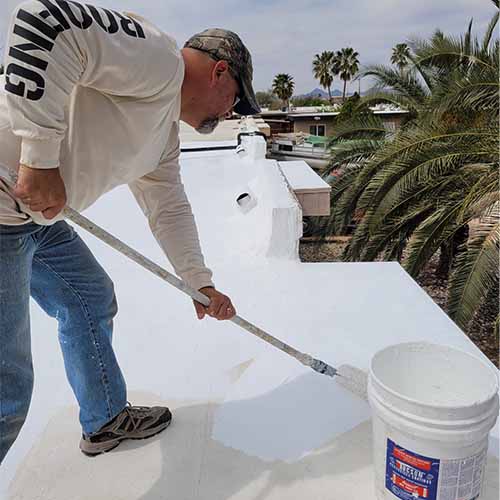
The third is spray application without backrolling. Spraying is faster, and speed is profitable. But a spray tip applies coating thinner and less consistently than a roller. There’s also a compounding problem in Tucson’s summer heat; coating sitting in a spray tank in direct sun loses moisture, which leads some contractors to thin the product with water to keep it flowing through the tips. That further reduces the solid content and the dried film thickness.
The one exception is when a contractor sprays to deliver material to the roof and then immediately backrolls; physically rolling the coating into the surface after spraying. That technique can work. If a contractor tells you they spray, ask specifically whether they backroll. If the answer is no, ask them how they can guarantee the manufacturer’s required coverage rate was hit. A contractor who does the job right will have a clear answer. One who doesn’t probably won’t.
What to Ask Before You Hire Anyone
You don’t need to be a roofing expert to protect yourself here. Three questions will tell you most of what you need to know. What product are you using, and what does the data sheet say about coverage rate? How many gallons or buckets are you putting on my roof, and will that be in the contract? And if you spray, do you backroll?
A contractor who answers all three without hesitation is worth talking to further. One who hedges or gets vague is telling you something.
Get a Quote From a Contractor Who Shows Their Work
DSR Roofing calculates exact material quantities for every roof we estimate and puts the bucket count in writing. We’ve done this work across the Tucson area; in Catalina Foothills and Oro Valley where larger homes demand precision, in Casas Adobes and Tanque Verde where older flat roofs are long overdue, in Marana, Green Valley, Sahuarita, Vail, Drexel Heights, Picture Rocks, and Tucson Estates. Wherever you are in the greater Tucson area, the standard doesn’t change; the right amount of material, applied correctly, documented in your estimate before we ever touch your roof.
If you want to know exactly what your roof needs and want a contractor who won’t fudge the numbers, get a quote and we’ll walk you through it.